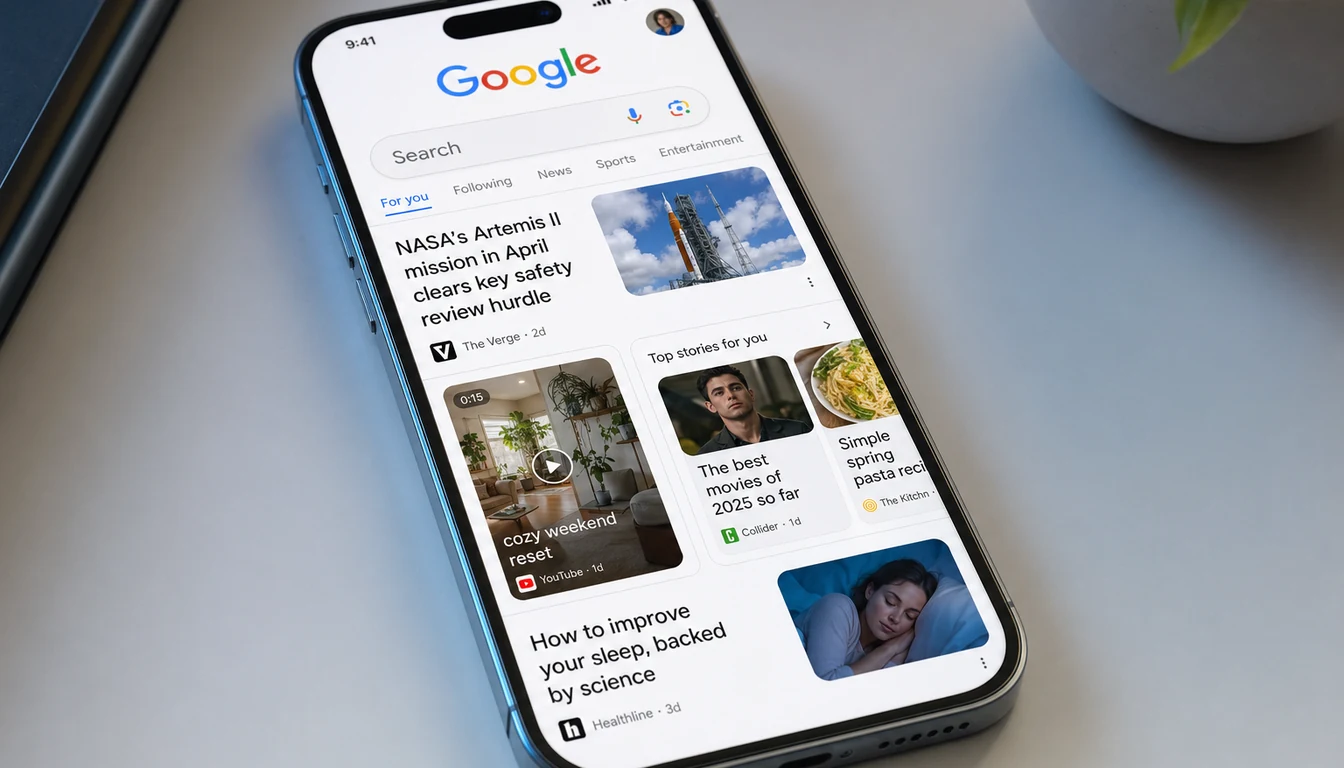
Why Google Discover is not Google Search (and why it changes everything for your traffic)
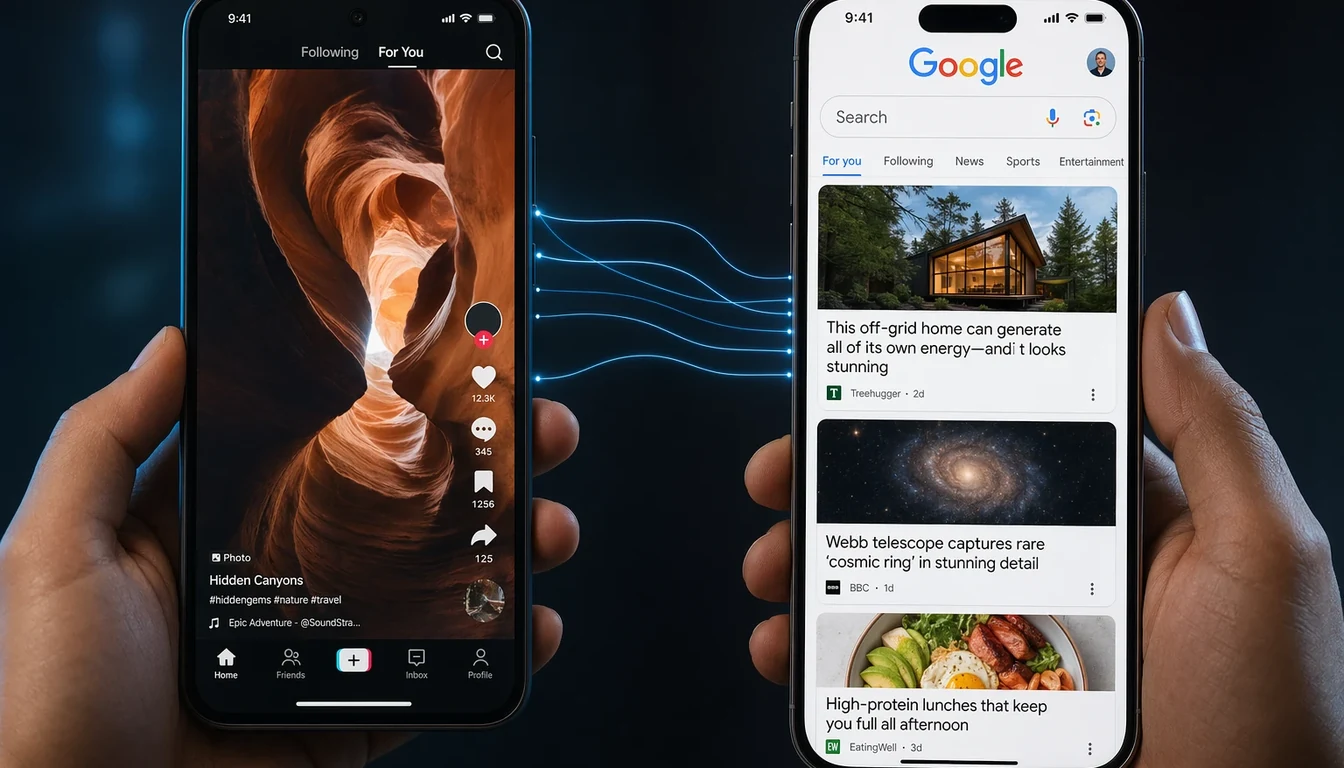
Same brand, same interface, but two radically different engines. As long as Discover is treated like bonus Search, publishers burn editorial budget on tactics that no longer work. Let's break down the mechanics that separate the two.
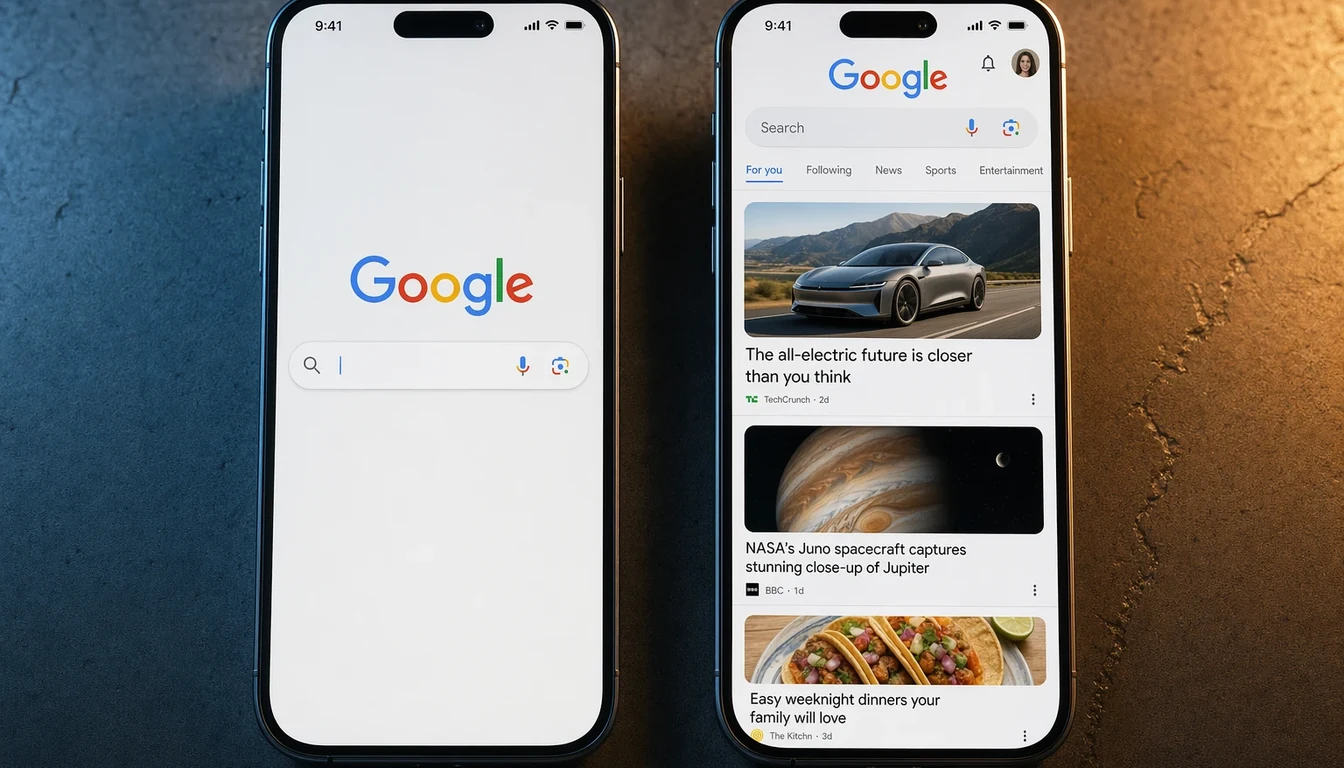
When an editor-in-chief says "We do SEO, Discover will follow," you already know they're about to lose 50% of their mobile traffic in the next 18 months. Not through incompetence — through framing error. Discover and Search share the same brand, the same index, and the same address bar. But technically, strategically, and operationally, they are two radically different products.
As long as Discover is treated like a Search bonus, you end up writing articles that perform okay on both channels instead of excelling on one. Let's break down the mechanics separating them.
Unless explicitly attributed to an external source, the specific percentages, thresholds and time windows mentioned in this article are DiscoReady's or the SEO community's own observations. For officially attested data on Discover's 2026 architecture, see our sourced analyses: Content, Moonstone, Aura — Layer 1 (55% of FR volume) and DeepTrends and DeepTrendsFable — the trends layer. The list of primary sources appears at the end of the article.
Same index, two engines
Let's start with the fundamental misunderstanding: Search and Discover share the Google index. The crawled, indexed, spam-evaluated pages analyzed by Mueller and team are the same. On that layer, no difference.
But the index is just raw material. The ranking engine that decides what shows to whom is completely different between the two products:
- Search pulls from the index in response to a query and ranks results on question-answer relevance.
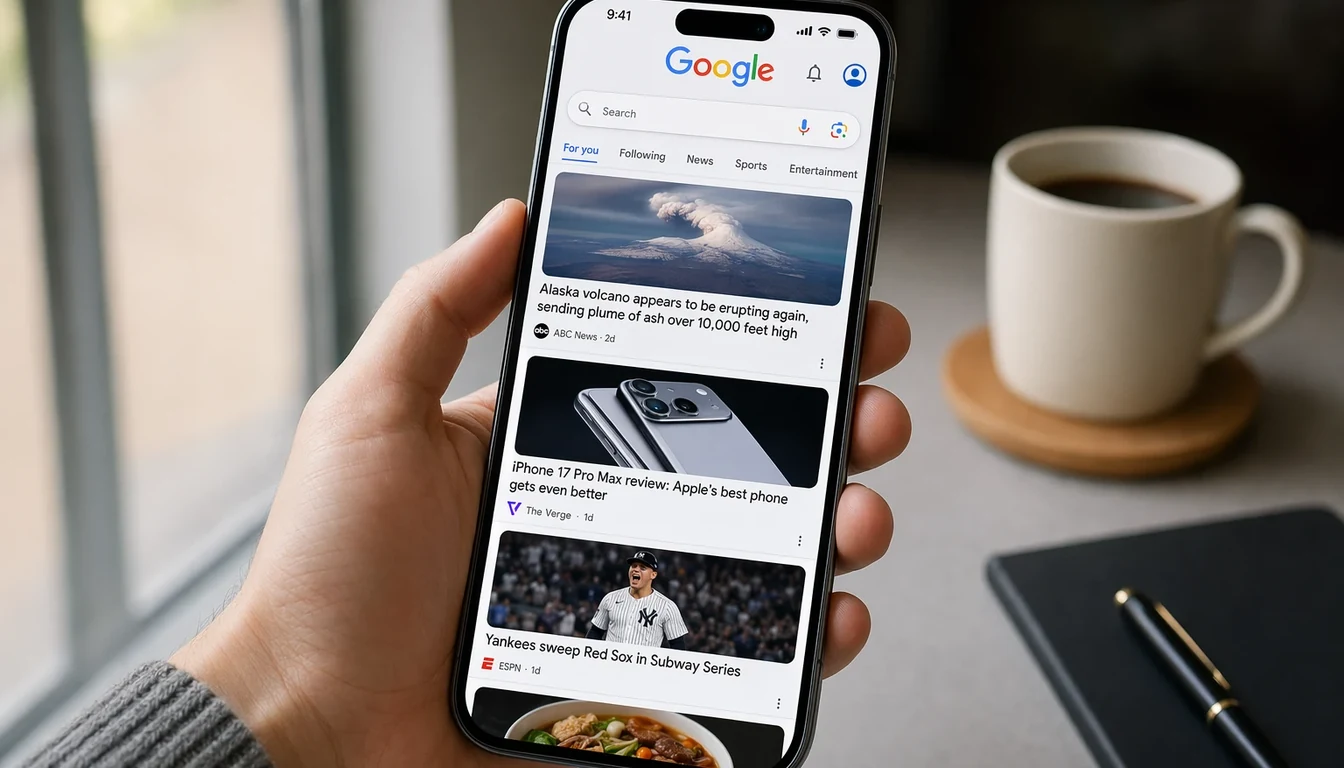
- Discover pulls from the same index with no query and ranks results on profile-content relevance.
It's the difference between an answerer and a recommender. Two jobs, two algorithms, two sets of signals.
Query vs profile: the structural opposition
Everything flows from there. Search handles explicit queries (what the user said they wanted to know). Discover handles implicit profiles (what the algorithm thinks the user would want to read if they thought about it).
Direct consequence on your editorial strategy:
- In Search, you optimize for an intent. The title must match the keyword, the content must answer the question, the structure must help Google recognize the intent.
- In Discover, you optimize for a profile. The title must trigger emotion in the target reader, the content must hold their attention, the structure must maximize dwell time.
These two sets of constraints don't always contradict, but they don't stack either. An article written for one has slim odds of excelling on the other without adaptation.
CTR vs dwell time: signals don't share the same king
In Search, CTR (click-through rate from SERPs) is an important signal but not the king — ranking still mostly depends on semantic relevance and links. In Discover, dwell time has become THE dominant signal in 2025–2026.
That means in Discover:
- A clickbait that gets 8% CTR but 80% bounce at 3 seconds is severely penalized. Google pulls your site out of the feed on that theme for weeks.
- A sober editorial hook that gets 4% CTR but 2 minutes average read time triggers a ramp-up. Impressions explode, reach widens.
In Search, it's better to be clicked often, even by the wrong audience. In Discover, it's better to be clicked less but by the right people who actually stay and read.
Raw authority vs entity recognition
For 15 years, domain authority (DR, DA, PageRank) was the SEO pillar. A big site ranks because it's a big site, period.
In Discover, that lever counts much less. What counts is entity recognition: does Google identify you as a credible editorial source on a specific theme? That's a binary question, not a continuous score. The answer lives in your domain's Google Web Profile.
A small site with a validated entity can rank strongly in Discover within its niche, while a big generalist site without a thematic entity will struggle. It's a complete reversal of the classic SEO model.
Check in 1 second whether your domain has a Google Web Profile — it's the non-negotiable prerequisite.
Evergreen vs freshness
Search still rewards evergreen in 2026: a well-positioned guide can generate traffic for 3–5 years. Discover has killed evergreen for most themes. The push window is 48 to 72 hours after publication, and the algorithm almost always rejects older articles — unless you massively refresh them.
Budget consequence: in Search, a well-crafted article is a long-term investment. In Discover, it's a one-shot play. Two opposing economic models for content production.
Why a top-3 Search article guarantees nothing in Discover
A typical case we see in 80% of client sites: article ranking #2 on Google for a competitive query, 5,000 visits/month in Search. Zero Discover impressions. Why?
Because the article is technically perfect for Search: keyword-dense title, TL;DR structure, direct answers to sub-questions. But it's too rational for Discover — no emotion, no story, no visual hook. The Discover algorithm classifies it as "utility page" and pushes it to no one.
The fix isn't to sacrifice Search for Discover. It's to write two title and intro variants, publish Discover-first, then refresh with the SEO version once the wave passes. More work, but it maximizes monetization on both channels.
And if you only do Search?
You give up 35% to 60% of mobile organic traffic on your market. In major markets in 2026, mature publishers pull on average 45% of their organic traffic from Discover, against 55% from Search. Ignoring Discover means operating at half your acquisition capacity.
Our 7 fundamental differences between classic SEO and Discover SEO break down the operational adjustments to integrate starting tomorrow.
Quick recap: Search and Discover share the index, not the algorithm. Search ranks by query, Discover by profile. Search rewards CTR, Discover rewards dwell time. Search values raw authority, Discover values entity recognition. Search forgives evergreen, Discover demands freshness. Two products, two strategies, two editorial plans.
The first concrete step
If you've read this far, the right question isn't "how do I adapt my SEO strategy for Discover." It's "is my domain even eligible?". No editorial optimization compensates for a missing recognized entity. Run our Profiler — in 1 second you know whether Google identifies you, and if not, why.
Take action in 1 minute
Three free tools the editorial team uses daily — tested across French and international publishers.
📘 Want to go deeper? Grab the free Discover Essentials ebook (33 pages, 25-min read).
Sources and further reading
- 1492.vision — Sylvain Deauré & Damien Andell: Discover monitoring platform, analysis of 42 million cards (Dec 2025 - Feb 2026), FR-specific figures per pipeline
- Metehan Yesilyurt — metehan.ai: Google App SDK decompilation (87,498 Java classes), 8-stage pipeline, JSON-LD > OG priority
- SearchEngineLand — Inside Google Discover: 20 pipelines, 42 million cards: public relay of the 1492.vision analysis (aggregated figures)
- iPullRank, Mike King — Secrets from the Google Algorithm Leak: analysis of the May 2024 Content Warehouse leak (2,596 modules, 14,014 attributes)
- SparkToro, Rand Fishkin: public disclosure of the leak
- Hobo Web — Content Effort Signal: technical detail on the
contentEffortsignal and theQualityNsrPQDatamodule
Frequently asked questions
If Search and Discover share the same index, why do their logics differ?
The index is shared, but the ranking signals are distinct. Search pulls indexed pages and ranks them on query-document relevance; Discover pulls the same pages and ranks them on profile-content relevance. The index is raw material; the ranking engines are independent.
Should I separate my SEO strategy and my Discover strategy?
Yes, and it's counterintuitive. A keyword-optimized title performs well in Search but can kill an article in Discover (Discover penalizes clickbait or keyword-dense titles). Aim for a human, emotionally-charged title for Discover, and place keywords in H2/H3.
Can the same article perform both in Search and Discover?
Yes, that's the ideal double-dip — an article with high editorial quality (strong E-E-A-T, freshness, engagement) checks both boxes. But it's rare: fewer than 15% of published articles hit meaningful performance on both channels at once.
Why does my Search-top-3 article get zero Discover impressions?
Because the ranking criteria are different. A Search top-3 can be a keyword-optimized yet emotionally cold article — but Discover rewards emotional engagement, strong visuals, and freshness. Content that's "technically perfect" for Search is often too rational for Discover.
What if I only do Search, not Discover?
You're missing 35% to 60% of mobile organic traffic on your market. In 2026, publishing only for Search means ignoring half the acquisition pipeline. Check your Google Web Profile first — it's the technical prerequisite before any Discover entry.
Does your site have an active Google Web Profile?
No Discover tactic works if Google doesn't recognize you as an entity. 1 second to check, free.
Launch the Profiler →